
Categories
'25⋆. 𐙚 ˚ papaya⋆.˚

The Joke of Papaya Rules

The 2025 Formula 1 season has been McLaren’s best in over a decade with race wins, podiums, and a genuine title fight. But beneath the celebration lies a familiar tension: the sense that, no matter how much changes, the Papaya Rules still bend toward Lando Norris.

McLaren insists on equality between its two drivers. Yet when it comes to the big moments like strategy calls, pit stop priorities, and team orders, the orange always seems to glow a little brighter on Lando’s side of the garage.

Take Monza. After Norris lost time in a botched pit stop, Oscar Piastri undercut his way into second place. It should have been a straightforward position swap earned on merit. Instead, McLaren stepped in, asking Piastri to hand the spot back. Team principal Andrea Stella defended it as “consistent with our principles,” but the optics were obvious: when there’s a tough call, Norris gets the nod.

That moment summed up McLaren’s dynamic perfectly, polished on the outside, political on the inside. Piastri accepted the decision with trademark composure, saying the team had “valid reasons.” But for fans, it looked like déjà vu. Different year, same hierarchy.

The situation feels even sharper because Piastri isn’t the quiet rookie anymore. He’s won races, matched Lando on pace, and proven himself as one of the grid’s most disciplined, methodical drivers. Yet when things get tight, he’s still treated like the junior partner. He’s the one asked to hold position, the one told to think “about the team,” while Lando is free to chase the win.

McLaren’s reasoning isn’t irrational. Norris is the team’s emotional core as he is the driver who stuck through the lean years, the one who built relationships across the garage, and the face of their brand. That kind of loyalty earns trust. It’s no surprise that when decisions must be made in a split second, the team instinctively leans toward their long-time driver. But in a season where both are fighting at the front, those instincts come under more scrutiny than ever.

Even the team’s upgrade patterns fuel the narrative. Time and again, Lando receives new components a race earlier officially for “testing” reasons, but the result is the same: he gets first shot at the potential advantage. When you’re separated by tenths of a second, that’s not a small detail.

Then there’s the messaging. After incidents like the Canadian collision, where Norris admitted to breaking the “rule number one” by hitting his teammate, McLaren moved swiftly to defend him. The tone was protective, contrite, but not critical. It’s a leniency Piastri’s never needed but might not get if the roles were reversed.

The truth is, Papaya Rules aren’t written to be unfair, they’re born from familiarity. Norris has been in papaya orange for six seasons; he’s earned influence through time, trust, and talent. But equality in Formula 1 isn’t just about machinery, it’s about perception. And right now, perception says that when the chips are down, McLaren still dances to Lando’s rhythm.

Oscar Piastri is patient. He’s smart enough to know these things don’t shift overnight. But as 2025 edges toward its finale, one thing feels clear: McLaren may talk about balance, but the heart of the papaya still beats for its original son.

One response to “The Joke of Papaya Rules”

  1. mindfully2750e7c2a2 Avatar
    mindfully2750e7c2a2

    go papaya go!!

    Like

Leave a comment

Categories
'25⋆. 𐙚 ˚ mercedesଓ

Conflict in Mercedes: Contract deals and Discussions

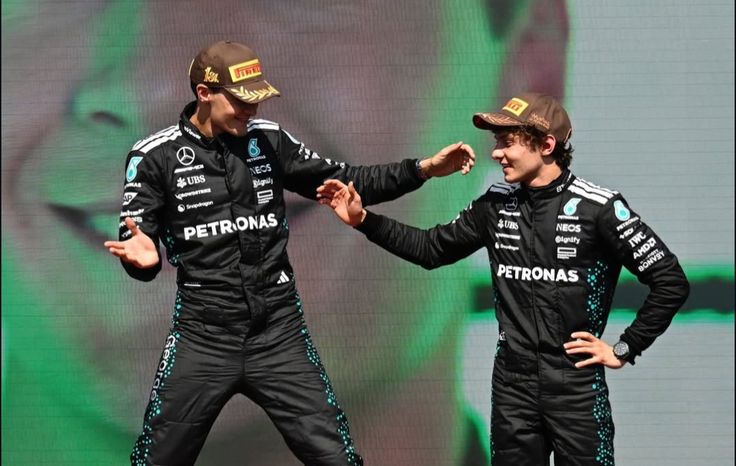
As the 2025 season winds towards its climax, the team faces one of the most delicate contract situations on the grid. Both George Russell and Andrea Kimi Antonelli are out of contract at the end of 2025. The decisions Toto Wolff and his team make in the coming weeks will not only shape the 2026 driver lineup, but potentially the entire trajectory of Mercedes’ post-Hamilton era.

Russel’s Resurgence: A Statement win in Singapore

Russell’s win in Singapore couldn’t have come at a better time, achieving his second win of the season and drawing high praise from Toto Wolff, who called it ‘a race that shows George has truly come of age as a team leader.’

This victory also silenced critics who questioned whether George could lead Mercedes after the departure of 7-time World Driver’s Champion, Lewis Hamilton. Russell has reasserted himself as a cornerstone in Mercedes’ rebuilding phase, and crucially, given himself powerful leverage in the ongoing contract talks.

The Demands of George Russell

It has been noted that George’s team has been negotiating hard for a multi-year extension through 2028/29, a salary increase to put him on par with peers like Lando Norris and Charles Leclerc and intriguingly, a performance clause tied to his results relative to Antonelli. His requests could be seen as bold, as it underlines Russell’s confidence and ambition. But it also poses a risk: too much contractual power could tilt the internal balance against his young teammate before a new era even begins.

Still, Russell’s argument is persuasive. With two wins, consistent podiums, and a growing leadership role, he’s earned the right to call himself ‘Mercedes’ anchor driver.’ The question for Toto Wolff isn’t whether to keep Russell, it’s how much to give him what he wants without stifling Antonelli’s rise.

Kimi Antonelli and His Future.

On the other side of the garage stands Kimi Antonelli, the 19-year-old Italian prodigy who many see as the future of Mercedes. His promotion to the senior team was bold, only doing a year each in Formula 3 and Formula 2. The paddock buzzed with speculation about whether he would be loaned to another team to gain experiences after a series of accidents which made people question his abilities in F1, but Toto Wolff shut that down quickly: ‘Kimi is part of our project. He’s staying with us, no discussion.’

Kimi’s performance as a rookie this year has been going well as he adapts to the demands of F1. The challenge for Mercedes is clear: nurture Antonelli’s development without overshadowing him with a contract that cements Russell as the uncontested team leader.

Due to all the comparison to Verstappen or Schumacher, Antonelli has faced media criticism as he allegedly hasn’t showed people that he is capable of being the next best thing. This raises the question whether Russell should be given his demands due to Kimi’s inexperience or if Toto Wolff should give them a more fair contract for both drivers. No driver thrives in a garage where their path upward is blocked, and Mercedes’ future success may depend on ensuring Antonelli feels he has equal footing and a real chance to grow.

What it means for Mercedes and Formula 1

The consensus in the paddock is that both drivers will stay for 2026. But the terms of those contracts will determine whether Mercedes enjoys a harmonious internal rivalry or finds itself trapped in civil war. The 2026 regulations, with their new engine and aerodynamic rules, promise a reset for Formula 1. Mercedes wants to hit that reset button with unity, not turmoil.

On the other hand, if they become too lenient, they might have a situation like McLaren on their hands, where they present themselves as unbiased towards the drivers but sometimes show favour to the ‘team leader.’ Which is why managing both ambitions under one roof will test Mercedes’ leadership as much as its engineering.

2 responses to “Conflict in Mercedes: Contract deals and Discussions”

  1. hnaima81 Avatar

    i feel like george is overplaying his hand kind of bc he needs them more than they need him in the long run 😓

    Like

    1. sumaya ali Avatar

      they definitely do need him but i do think his alleged contract terms are very bold

      Like

Leave a comment

https://www.instagram.com/sumayaonthegrid/

Categories
'25⋆. 𐙚 ˚ lewis' impact ⋆

More Than a Champion: Hamilton’s Role in Empowering Young Drivers of Colour

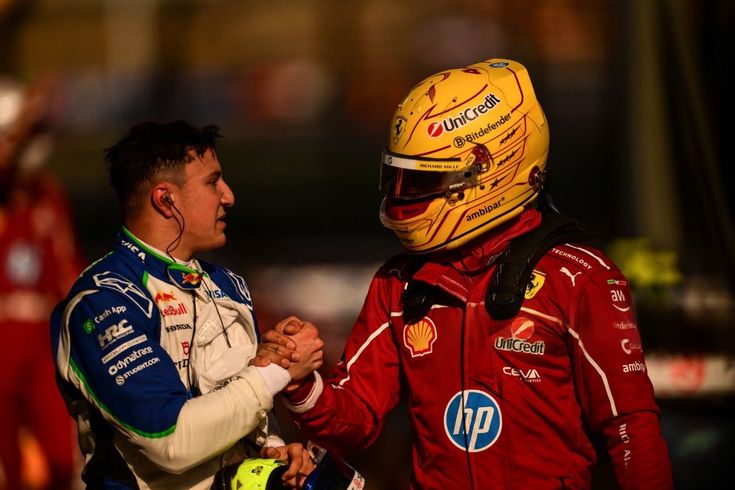
Lewis Hamilton’s legacy extends far beyond his seven world titles and countless records. His career has not only redefined Formula 1 but has also inspired a generation of young ethnic drivers who see him as proof that they, too, can succeed in a sport historically dominated by white men. Hamilton’s presence on the grid has provided representation where there was once none, giving young drivers of diverse backgrounds the confidence to pursue their dreams.

For many, the inspiration began in childhood. Japanese Formula 1 driver Yuki Tsunoda recalls: “When I was 8 years old, I went to Fuji Speedway in Japan and Lewis Hamilton was racing in McLaren. I just thought, ‘one time I want to drive with this guy and race against the best driver in the world.’” That moment of witnessing Hamilton competing at the highest level ignited Tsunoda’s ambition to one day share the track with him.

Isack Hadjar, the first Arab/Amazigh driver in Formula 1, has been even more vocal about Hamilton’s influence. He explains: “I grew up watching him. Since I was three years old, I’ve always been a fan of him and rooting for him until he won seven titles. I was really happy to actually be supporting the guy who was winning everything, and I think he’s the most complete driver out there. Since I started single-seater racing, I got interested in Formula 1 even more and it was clear to me that Lewis was the guy to beat and the reference for me, so I’ve always looked up to him as the GOAT. I really love the guy, and he inspires me so much in everything I do.”

Hadjar has often spoken of his admiration, saying: “Every time I see Lewis, I want to shake hands with him. He’s the GOAT.” On Track Limits YouTube, when asked which driver’s career inspires him most, Hadjar didn’t hesitate: “I think the answer is quite easy, just Lewis Hamilton. Lewis Hamilton’s career is just another level. The numbers are just insane! He’s the GOAT for me. He’s my favourite driver; he inspired me so much.”

Hadjar also acknowledges his own unique place in motorsport history. As the first Arab/Amazigh driver, he has spoken about how this aspect of his identity often “went under the radar.” Despite racing under the French flag, Hadjar is proud of his cultural roots and often expresses his love for his heritage. Much like Hamilton, he represents more than just racing success; he embodies the importance of diversity and cultural pride within the sport.

Hamilton’s influence doesn’t stop there. Arvid Lindblad, currently competing in Formula 2 and is Half Indian, also reflects on the impact Hamilton had on him as a young driver of colour. He shares: “Growing up, Lewis was the one I sort of looked up to the most. When I started karting, there weren’t really many people of colour and I found that to be quite a nice link. His first year in F1 was the year I was born and he was doing very well when I started getting into the sport. He was the one that I felt sort of the closest relation to in the beginning.”

Beyond his achievements on the track, Hamilton has also used his platform to speak out against racism and for the Black Lives Matter movement. In 2020, he led Formula 1 drivers in taking a knee before races, wore shirts calling for justice, and consistently challenged the sport to do more for diversity and inclusion. As the only Black driver in Formula 1 history, Hamilton’s decision to stand so firmly for equality has sent a powerful message to young ethnic drivers: that their voices matter just as much as their performances. His courage in confronting these issues has shown that being a racing driver is not only about speed and talent, but also about leading change in the wider world.

These testimonies highlight the profound impact Hamilton’s visibility, dominance, and activism have had on a new generation. Simply by being himself, a Black man excelling in Formula 1, Hamilton has broken barriers, challenged stereotypes, and opened doors for countless aspiring drivers who might have once believed motorsport was not for them.

What makes Lewis Hamilton’s story so powerful isn’t just the wins and the records, but the battles he had to fight just to get there. Growing up in Stevenage, he didn’t come from a wealthy background like many of his rivals and his dad worked multiple jobs just to keep him karting. On top of that, he faced racism from a young age, from being called slurs on the track to being doubted simply because of the colour of his skin. Even when he made it to Formula 1, the scrutiny and criticism he received often felt harsher than what other drivers faced. Yet, instead of letting it break him, Lewis turned it into fuel. He pushed harder, rose above the noise, and showed the world that he wasn’t just good enough to belong, he was destined to dominate. That resilience is a huge part of why so many young drivers from diverse backgrounds see themselves in him. Hamilton’s legacy, therefore, is not only defined by his records but also by the confidence and inspiration he has instilled in young ethnic drivers across the globe. His journey proves that representation matters, and his success, both on and off the track, continues to pave the way for a more inclusive future in Formula 1.

9 responses to “More Than a Champion: Hamilton’s Role in Empowering Young Drivers of Colour”

  1. hnaima81 Avatar

    they’ll never be able to take his impact from him 🙏

    Like

  2. xmomina_1 Avatar

    i love this so much genuinely – well done sumaya!!! 💓

    Like

    1. sumaya ali Avatar

      TYSM MOMINA I APPRECIATE IT🫶🏽🫶🏽

      Liked by 1 person

  3. Anonymous Avatar

    such an informative article love ittt❤️❤️

    Liked by 1 person

    1. sumaya ali Avatar

      Thank you!! I’m glad you enjoyed it ❤

      Like

  4. Ari Avatar

    rereading and wow!!! Seriously, your writing is so good. Lewis has been such an amazing role model for so many younger drivers, and I’m happy he can be that for them.

    Liked by 1 person

    1. sumaya ali Avatar

      Thank you!! Lewis has been such an inspiration for people even outside of Formula 1 and he has also inspired me to get into journalism. I hope you can tune in for more of my work :))

      Like

  5. megan Avatar
    megan

    goated writer writing abt a goated driver❤️❤️ loveddd thisss!!!

    Like

    1. sumaya ali Avatar

      HIGHEEST FORM OF PRAISE TYSM MEGAN

      Like

Leave a comment

Categories
'25⋆. 𐙚 ˚ rookies𐙚

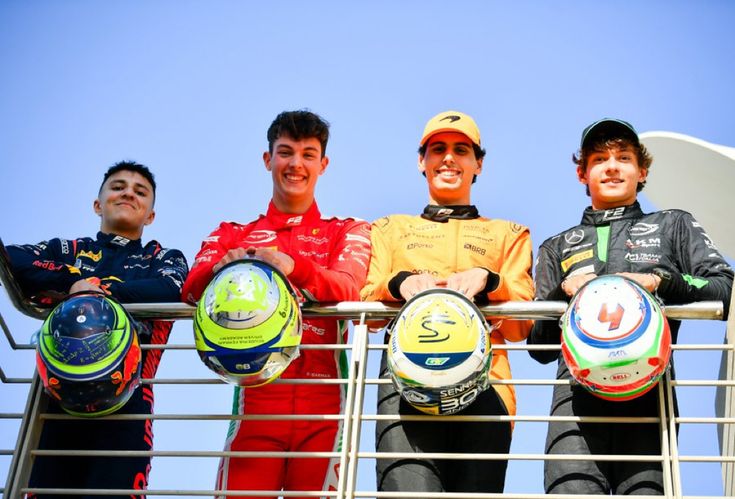
Rookie Surge: F1’s Bold New Class of 2025

We will first be starting with Ollie Bearman, who in my opinion, is quite the underrated driver. During his debut race in Saudi Arabia last year, he was able to score points while covering for Carlos Sainz, which to me seems like an amazing feat especially when driving the world-renowned Ferrari. By finishing 7th, he became the youngest British driver to score points on debut since 2011 and was voted Driver of the Day by many fans. Just last week he pulled an incredible stint of making up 10 grid positions and claiming p6, showing that despite not having the best qualifying record compared to the rookies, Oliver Bearman has been holding his own quite well in his Haas car. On the other hand, Bearman is no stranger to penalties and challenges. A 10-place grid drop and 2 penalty points in Monaco and another in Silverstone has unfortunately overshadowed his successes for many Formula One watchers. To me, however, Bearman shows great promise, perhaps even gaining a Ferrari seat in the near future.

Next we have the F3 and F2 champion, Gabriel Bortoleto. This is a rookie who has improved the most in the eyes of many fans and myself. Although his season started off rocky, with a DNF in Miami, he was able to have an amazing breakthrough moment in Austria. Starting p8, Bortoleto drove a measured race and was able to score his first points. Budapest was also an exceptional race from Bortoleto as he finished 6th, and gained praise from Fernando Alonso, who called him ‘the best rookie of his generation.’ Although Bortoleto is driving a Sauber, when the car has delivered, so has he. However, because he is in a Sauber, Bortoleto has had three DNFs, and isn’t the most consistent rookie on the grid as we speak. But that could all change in the next few races.

Andrea Kimi Antonelli was the driver everyone was looking forward for this year. And this continued to be the case after his first race in Melbourne, where although he qualified p16, became 4th amidst the chaotic conditions, only dropping down to p5 after receiving a five-second penalty. Kimi started his season off with an impressive high note, becoming the youngest driver ever to lead a race at just 18 years and 224 days old and getting the youngest fastest lap record too. His podium in Canada was an incredible show of his talents and especially that early into the season too. But a rookie is still a rookie and Kimi has seen his fair share of mistakes during this season. But personally, I think Kimi has the most media burden than the other rookies, as he is unfairly expected to do much better than the rest, as he is in a Mercedes. This pressure is perhaps too much for a 19 year old to handle by himself, and although he has had some amazing successes this season, f1 fans have pushed that aside and have instead started comparing him To Max Verstappen. In my opinion, this is extremely detrimental to his confidence, as Kimi is his own person and shouldn’t be compared to the 4-time world champion.

Now, is the most unexpected rookie, Isack Hadjar. During pre-season, there was some commotion about Isack Hadjar getting a seat at VCARB, claiming that he wasn’t ready for F1 due to his particular affinity for screaming over the radio in Formula 2. This narrative only proceeded when Isack had an unfortunate opening to the season by crashing during the formation lap of the Australian Grand Prix. Anthony Hamilton consoled the crying driver but this tender moment didn’t stop Helmut Marko from claiming this burst of raw emotion as ’embarrassing.’ But it didn’t take long for Isack Hadjar to bounce back and claim his first points in Suzuka, finishing p8. Isack was the only driver to hold the title of no Q1 exits, until Monza. After the horrible events in Australia, Hadjar has made an incredible comeback and has proved everyone wrong by getting his first F1 podium in Zandvoort, gaining praise from his all-time idol Lewis Hamilton and from his fellow F1 drivers as well. Personally, Isack Hadjar has shown the most growth as a driver, climbing from the depths of media scrutiny into claiming his podium just 14 races after.

Thus, every rookie is going through their own journeys, some less fortunate than others, but they all show great promise for the future. And who knows, maybe one day we will witness them fighting for championships.⋆. 𐙚 ˚

https://www.tumblr.com/oksumaya

https://www.instagram.com/sumayaonthegrid/?next=%2Fsumayaonthegrid%2F

2 responses to “Rookie Surge: F1’s Bold New Class of 2025”

  1. oknaima Avatar
    oknaima

    so cute i love this

    Liked by 1 person

  2. marwa Avatar
    marwa

    go rookies go!!

    Liked by 1 person

Leave a comment